THE STACK
A four-layer framework built on operating discipline
Most organizations fail in the gap between strategy and execution. That's not a strategy problem—it's an operating system problem. The strategy didn't change. The route did.
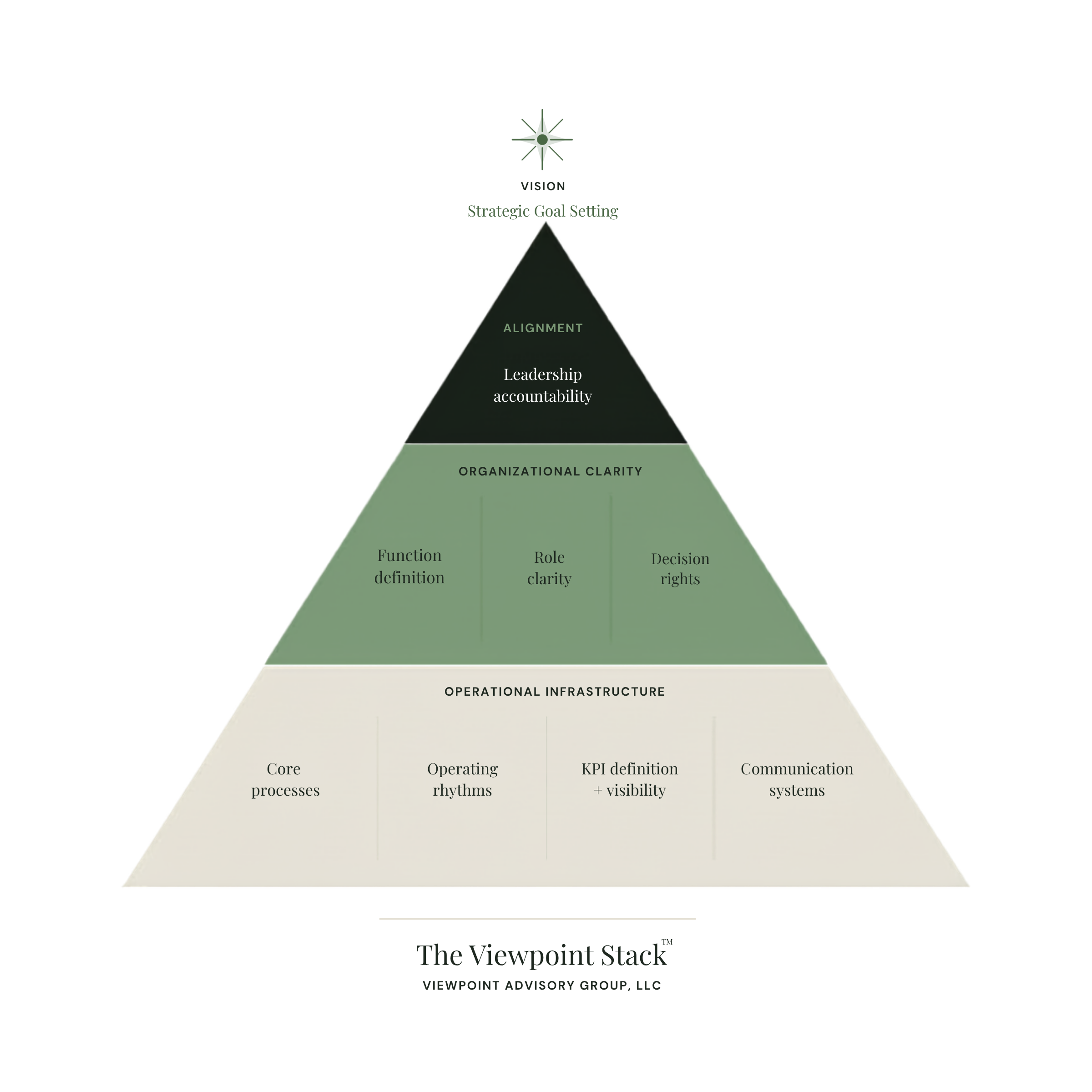
The Viewpoint Stack is a four-layer framework built on the belief that you can design your organization the same way you'd design a product—with intention, discipline, and a view of the whole system. Each layer depends on the one below it. When one breaks, execution collapses downstream.
Vision: Strategic Goal Setting
Every organization has a destination in mind, but few can articulate it clearly enough for a hundred people to make the same call without a meeting. When vision stays vague, teams don't misalign on purpose—they just optimize for different definitions of winning. Strategic clarity here is what lets ambition survive contact with the org chart.
Alignment: Leadership Accountability
Alignment isn't agreeing on the destination once—it's staying pointed at it. New opportunities and urgent requests will keep showing up, and each one will look important in the moment. Real alignment means leadership stays clear on where the business is headed, says out loud what it's choosing not to do, and holds every team accountable to that line—not just to the goals, but to the boundaries around them.
Clarity: Functional Scope, Decision Rights & Role Clarity
Most companies inherit their structure by accident, and it shows up as friction long before anyone names it: work stalling in no-man's-land, the same decision made twice by two different people, effort spent protecting territory instead of outcomes. Functional scope, decision rights, and role clarity aren't org-chart hygiene—they're what let people move without waiting on you.
Infrastructure: The Systems That Scale
This is the layer that actually carries the weight. Without a shared scorecard, consistent operating rhythms, visible work, and clean information flow, even a well-aligned leadership team is flying blind—and the gap between what leaders believe is happening and what's actually happening quietly widens until it's a crisis. Infrastructure is what makes the route real, not just planned.